You can’t control whether a buyer says yes. You can control the daily activity that gets you there. Reverse-engineer the target and avoid the avoidance.
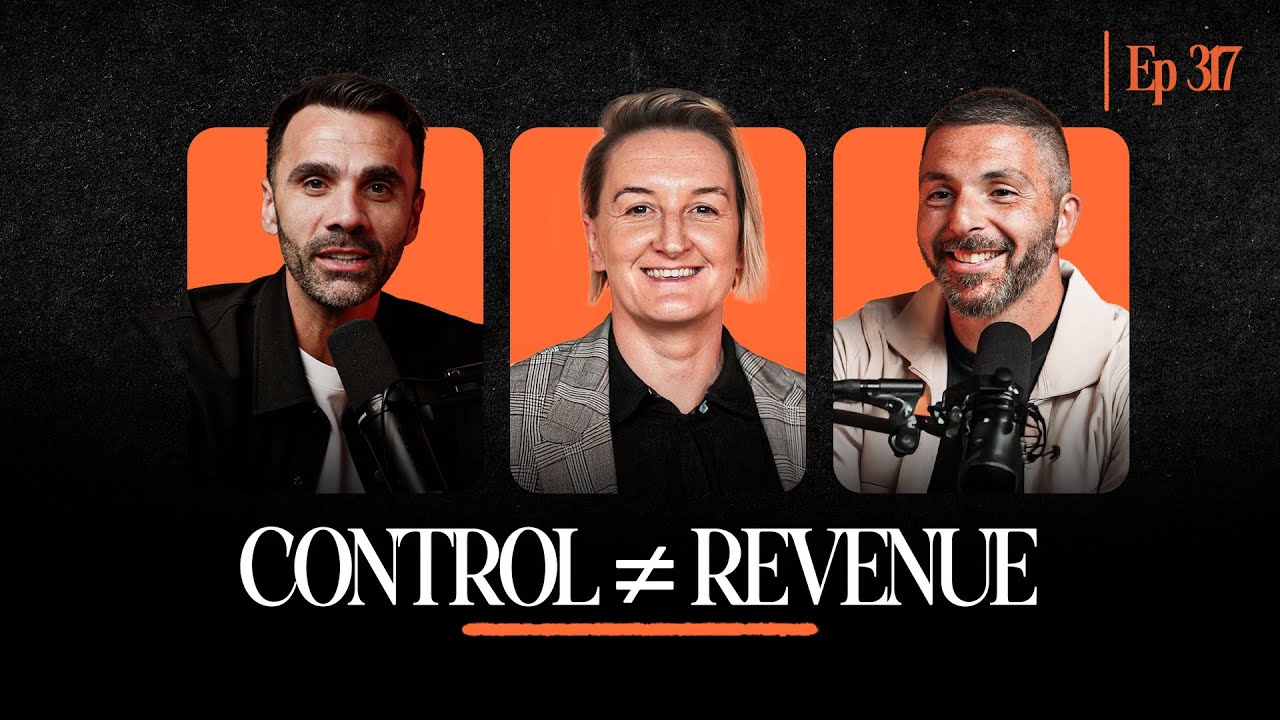
Key takeaways
The calculator isn’t a one-off. David re-ran it fortnightly against actual activity and the forecast tracked close to reality.
The mindset shift that lowers tension: “I can’t control my target, but I can control the activity I do each day.” Planning stops feeling like surveillance.
The numbers diagnose the funnel. Proposal conversion at 20 percent when it should be 60 is a training brief, not a character flaw. Regan’s firm used it to lift win rates from about 35 percent to among the market’s best.
The maths pushed partners toward bigger deals and a changed ideal customer profile, which is strategy, not just activity.
Baseline from the customer relationship management (CRM) system but sanity-check it. Expired close dates and stale stages mean recorded conversion rates need a pass with the rep first.
Time-block the hard thing first. Avoid the avoidance. And when a purple patch hits, cancel the internal meetings and ride it.
You can’t control winning a deal. I can’t control the buyers if they say yes or no. But I can control the activity that could lead to that success.
Luigi Prestinenzi, co-founder, Ricavi
Avoid the avoidance. What’s the one thing, that big scary monster I don’t want to face right now? Let’s go for that.
Regan Barker, co-founder, Ricavi
What does the calculator actually do?
It turns a number into a week. Luigi Prestinenzi walked David Fastuca through it years ago at David’s previous company, and David remembers the warning that he might fall off his chair. You enter deal size, time to close, and conversion rates from call to meeting to proposal to win. The sheet tells you how many calls, meetings, and proposals you need, and then asks what it looks like with three times the pipeline coverage in case the world isn’t perfect. David ran it every two weeks against his real activity. When the numbers matched, so did the forecast.
Why don’t more sellers plan this way?
Fear of the gap, mostly. Luigi coaches individual contributors constantly, and most have a target and a pipeline but no daily activity plan. When they miss, the post-mortem is vague. Regan Barker’s remedy is a motto: avoid the avoidance. Identify the scary thing, and do it first. David’s version is a time block every morning before anything else, because prospecting is the task that’s easiest to push behind the robotic ones. On a good morning he’d message the team to skip internal meetings and keep going.
Luigi’s coaching move is to get the tension down first. Nobody can control whether a buyer says yes. Once a rep accepts that, the activity plan looks like the part they do own, and the conversation moves to how.
What does the calculator reveal beyond activity?
Where the process is weak, and sometimes where the strategy is wrong. If proposal conversion is 20 percent and should be 60, that’s a training need with a name. If the required activity doesn’t fit inside a human week, Luigi’s conversation is with the leader, because the target is set up to fail. Regan’s firm found something more interesting. Running the numbers per partner showed that slightly bigger deals in a slightly higher market changed everything downstream, so they changed the ideal customer profile. The calculator is free in the Vault. Put your metrics in, ask where you lack confidence, and then put the activity in your calendar, because the calendar is the only plan that runs.
Questions this episode answers
How do you reverse-engineer a sales target?
Start with the number, apply average deal size, close period, and conversion at each stage, and derive weekly calls, meetings, and proposals. Then check the result fits inside real selling hours, and add a coverage buffer.
What if the required activity is impossible?
Then the target is broken, not the rep. Revisit deal size, the ideal customer profile, or the go-to-market motion. That’s a leadership conversation, and the calculator gives it a factual basis.
How often should you review your sales activity plan?
Fortnightly, according to David Fastuca. Compare the activity you did against the plan’s assumptions and adjust either the inputs or the behaviour.
Share article
Turn meetings
into revenue.
Coach every rep, capture every call, and know exactly what's going to close.
We offer hands on onboarding
“Ricavi is the AI sales platform that coaches your team in real time. Our customers see 7.8x pipeline growth in under 90 days.”

David Fastuca
CEO & Co-Founder
