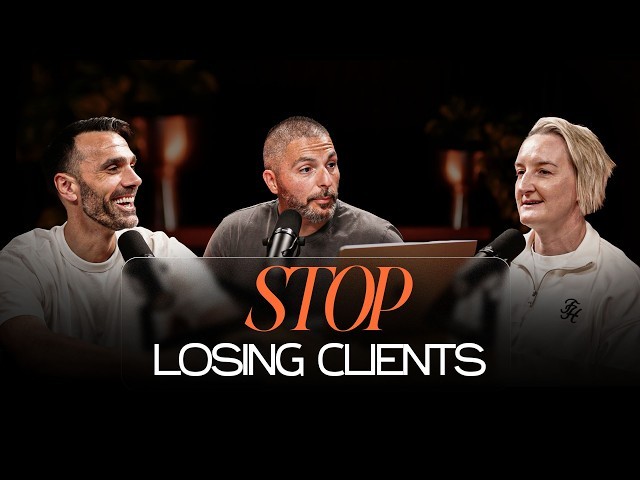
A CRM records the system; it isn’t one. The real system is your ideal customer profile, triggers, playbooks, documented process, and a practice layer.

Key takeaways
Ride-alongs expose the gap between what the CRM says and what happens in the field. Luigi’s time on the road with a customer produced product changes no dashboard would have surfaced.
ICP work is never finished. The world changes, and triggers are how you track it. Rank first-party signals above weaker ones and act only on the defined target list.
Twenty-two people pitched Regan on LinkedIn while she was on leave. None personalised. Two were colleagues from the same company with different messages, which says the company has no view of who owns which account.
Documentation comes before tooling. Playbooks per ICP for the top of the funnel, a meeting-to-close playbook, then retention. Embed them in the CRM afterwards.
Only about 57 percent of sellers follow their sales process, per a figure cited on air. The system needs a practice layer strong enough to make best practice the default.
Every competitor can fish in the same pond with the same data tools. The difference is clarity on who you serve and a repeatable process to reach them.
They’ve spent hundreds of thousands of dollars implementing a CRM, and they thought that the CRM was going to deliver the process and the system. But it’s not. It’s just a place of record.
Luigi Prestinenzi, co-founder, Ricavi
Every one of your competitors can fish in the same pond. The difference is they’re very clear who they serve, how they serve them, and the process in which they can capture them.
Luigi Prestinenzi, co-founder, Ricavi
What did the ride-alongs change?
Everything about how the founders understand their own buyers. Luigi Prestinenzi had spent months on Zoom with a customer before he spent days in their field. The discrepancy was real. Leaders read a CRM and make decisions on it, but people put that information in, and what they capture and why looks different up close. He came back with a list of things the product needed to do that no interview would have produced. The founders’ view is that the companies who win the current shift are the ones relentless about this, not the ones with the best tooling.
Why isn’t a CRM a system?
Because it doesn’t tell anyone what to do when a customer moves from here to there. A client came to Ricavi after a major CRM implementation, having assumed the platform would bring the process with it. The vendor didn’t document the buyer’s journey, the call cycles, or the account plans, and neither did the client. So performance stayed inconsistent, and the founders’ work was to build the missing system and only then embed it. Regan Barker’s holiday inbox is the same lesson from the outside. Twenty-two unpersonalised pitches, one usable trigger, and two sellers from one company who clearly can’t see each other’s activity.
What makes a system hold?
Practice. Regan’s addition to the framework is that the process needs moments built in where reps apply it, because buyer priorities shift and deals drop out. If barely more than half of sellers follow the process on their own, the system has to carry them. David Fastuca frames the whole thing as the unglamorous part of growth: founder-led selling runs on persistence, and somewhere past $5 or $10 million it stops working without a system underneath. Regan disagrees that it’s boring. Twelve months of slog to close one deal is boring. A system that lands more fish faster is the fun option. Define the target, map the process to decision and beyond, pressure-test it, systemise it, then refine, coach, and automate.
Questions this episode answers
Does a CRM give you a sales system?
No. The CRM records the system. The system is your ideal customer profile, your triggers, your playbooks, and your documented process from first conversation to decision. Build those first, then embed them.
What are the steps to build a client acquisition system?
Define who you target. Map the process from first conversation to decision and beyond. Pressure-test it. Systemise it. Then refine it through coaching and automate what you can.
Why do sales teams stop following the process?
Because it lives outside their daily work. Only about 57 percent of sellers adhere to their process, per a figure discussed on the episode, which is why the system needs practice built into it.
Share article
Turn meetings
into revenue.
Coach every rep, capture every call, and know exactly what's going to close.
We offer hands on onboarding
“Ricavi is the AI sales platform that coaches your team in real time. Our customers see 7.8x pipeline growth in under 90 days.”
David Fastuca
CEO & Co-Founder